Need Help With Your Workers’ Comp Claim? Our Lawyers Are Here to Help You With the Workers’ Compensation Claims Process
You were hurt at work, can’t earn your regular paycheck, and medical bills are arriving. Your employer may refuse to report the injury, claim it isn’t job-related, or pressure you to return before you’ve healed. If your workers’ comp checks stopped or treatment has been delayed, waiting can put your health and benefits at risk.
The Charlotte workers’ compensation claims process involves strict deadlines and paperwork. In most cases, injured employees must give written notice to their employer within 30 days and file a claim with the North Carolina Industrial Commission within two years. Adjusters may question how the injury happened or use incomplete records to deny benefits.
1Charlotte Injury Lawyers helps injured employees with initial claims, denied benefits, mediation, hearings, and appeals throughout Charlotte, Mecklenburg County, and surrounding North Carolina communities. You get personalized attention, direct access to a lawyer, and thorough case preparation. Contact us today for a free workers’ comp consultation.

How Our Workers’ Compensation Lawyers Guide Your Claim
Early mistakes can threaten your medical care and wage benefits. 1Charlotte handles each stage of the workers’ compensation claims process, from the first report through settlement, hearing, or appeal.
Reporting the Injury and Filing the Required Claim Forms
North Carolina generally requires written notice to your employer within 30 days and a Form 18 filed with the Industrial Commission within two years. Your employer’s Form 19 report does not replace your responsibility to file. If your employer won’t report your injury, our lawyers submit the required notice, preserve proof of how the accident occurred, and track whether the claim has been accepted or denied.
Documenting Your Injury, Restrictions, and Lost Wages
We collect medical records, work notes, wage statements, incident reports, witness accounts, and job-duty information to connect your injury to your job. We also track work restrictions such as reduced lifting or light duty. If your checks stop or you’re pressured to return before your doctor clears you, we act quickly to challenge the decision.
Mediation, Hearings, and Appeals Before the Industrial Commission
Some claims resolve through negotiation or mediation, where we evaluate whether an offer fairly covers your future medical and wage needs. When agreement isn’t possible, we present evidence and medical opinions at a hearing before the North Carolina Industrial Commission and can pursue an appeal within the required deadlines.
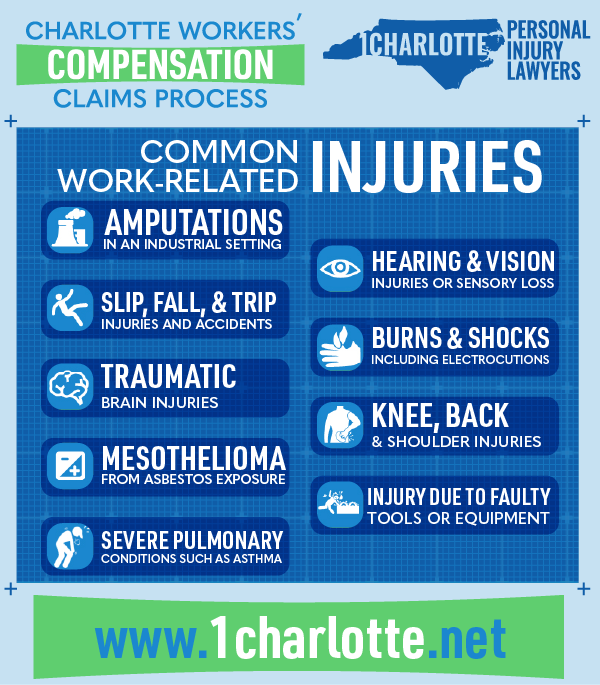
Work Injuries Handled Through the Charlotte Workers’ Compensation Claims Process
A workplace injury can leave you unable to earn a paycheck while medical bills keep arriving. Whether your injury happened in a single accident or developed over months of repetitive work, the Charlotte workers’ compensation claims process requires evidence connecting your condition to your job. 1Charlotte helps injured employees document that connection, pursue the benefits they’re owed, and challenge employers or adjusters who dispute valid claims. Here are a few injuries handled during this process:
Back and Repetitive Strain Injuries
Back injuries from lifting can involve herniated discs and nerve pain, while repetitive strain injuries develop gradually and can be harder to prove. We gather medical records, job-duty evidence, and physician opinions showing how your work caused or aggravated your condition.
Construction, Warehouse, and Truck Driver Injuries
Construction workers face falls, equipment incidents, and electrical hazards. Warehouse workers may be hurt by forklifts or repetitive lifting, and truck drivers may be injured in crashes or while loading cargo. During the workers’ compensation claim process, we preserve incident evidence and address disputes over whether you were performing job duties.
Falls, Knee Injuries, and Other Job-Site Accidents
A fall at work can cause torn ligaments, fractures, or lasting mobility problems. Other compensable accidents include being struck by objects, caught in machinery, or burned. We document the accident, treatment, restrictions, and lost wages to pursue your benefits.
Occupational Illnesses and Fatal Workplace Injuries
Chemical exposure, harmful dust, and other job hazards can cause occupational illnesses that employers often dispute. When a workplace accident or disease is fatal, we help eligible families pursue death benefits and burial expenses under North Carolina law.
Compensation Available After a Job-Related Injury
If you can’t work after a job injury and the bills are piling up, workers’ compensation may provide several forms of financial support. The benefits available depend on your medical needs, pre-injury wages, work restrictions, and whether your injury causes permanent impairment. 1Charlotte guides injured employees through the Charlotte workers’ compensation claims process and fights interruptions, underpayments, and unfair denials.
Medical Treatment
Workers’ compensation can cover authorized doctor visits, hospital care, surgery, physical therapy, prescriptions, and testing, along with mileage reimbursement. During the workers’ compensation claims process, we pursue authorization when treatment or specialist referrals are disputed.
Wage Replacement
Temporary total disability benefits are generally two-thirds of your average weekly wage, subject to North Carolina’s annual maximum. A seven-day waiting period usually applies, though that first week may be paid if your disability lasts more than 21 days. Partial benefits may be available if you return to light duty at lower pay.
Permanent Impairment or Disability
Lasting injuries may qualify for benefits based on an impairment rating, ongoing loss of earning ability, or total and permanent disability. During the workers’ compensation claims process, we evaluate your medical records and future needs before advising whether a settlement fairly accounts for a permanent injury.
Death Benefits for Eligible Family Members
Qualifying dependents generally may receive weekly death benefits for 500 weeks, with some dependent children eligible longer, and funeral expenses may be covered up to the statutory limit. We identify eligible beneficiaries and pursue every available benefit.
Why Injured Workers Choose 1Charlotte
A job injury can leave you without your regular paycheck while your employer disputes what happened, your checks stop, or you’re pressured to return before you’ve healed. 1Charlotte gives injured workers direct access to a legal team prepared to protect their benefits at every stage of the Charlotte workers’ compensation claims process. From filing your claim to representing you before the North Carolina Industrial Commission, we focus on getting your medical bills paid and your lost wages replaced.
Experienced Workers’ Compensation Attorneys Across North Carolina
Our attorneys know how claims move from reporting and medical care to mediation and Industrial Commission hearings. We serve Charlotte, Mecklenburg, Cabarrus, Gaston, and Union counties, with offices serving Charlotte, Raleigh, Durham, and Asheville.
Direct Lawyer Access and 24/7 Availability
You won’t be treated like a claim number. Every client gets individual attention and direct access to a lawyer, and we’re available 24/7 to answer questions about medical care, light duty, and delayed benefits.
Thorough Preparation for Every Stage
A fair settlement depends on evidence. Our trial lawyers prepare every claim for mediation, a hearing, or an appeal rather than pushing clients toward a quick resolution.
Frequently Asked Questions About the Charlotte Workers’ Compensation Claims Process
How Much Could My Workers’ Compensation Claim Be Worth?
Value depends on your average weekly wage, medical needs, time out of work, permanent impairment, and ability to return to your job. A fair settlement must account for future medical costs and reduced earning capacity, since a lump sum may end your right to additional benefits.
What If My Employer Says My Injury Is Not Work-Related?
Your employer doesn’t make the final decision. If your claim is denied on a Form 61, you can challenge the denial before the North Carolina Industrial Commission using medical records, witness statements, and evidence of your job duties.
How Long Do I Have to Report and File a Work Injury Claim?
You generally must give written notice to your employer within 30 days under N.C. Gen. Stat. § 97-22 and file Form 18 with the Industrial Commission within two years. Occupational disease claims may follow different timing rules, and telling a supervisor is not the same as filing the required claim form.
What Should I Do Immediately After Getting Hurt at Work?
Get emergency care if needed, report the injury to your supervisor, and follow up in writing. Ask which authorized provider to see, keep copies of all records and restrictions, and file Form 18 yourself rather than assuming your employer handled it. Don’t work outside your doctor’s restrictions during a workers’ compensation claims process.

Contact Us at 1Charlotte Injury Lawyers to Guide You Through the Workers’ Compensation Claims Process
Waiting can put your benefits at risk as evidence fades and bills pile up. At 1Charlotte Injury Lawyers, we handle claim forms, medical evidence, benefit disputes, mediation, hearings, and appeals before the North Carolina Industrial Commission, with direct lawyer access and 24/7 availability. Your consultation is free, and you pay no attorney’s fee unless we recover benefits for you, with any fee subject to Industrial Commission approval. Contact us today or call (704) 706-2689 for a free workers’ comp consultation.