After an auto accident, the police report is often the single most important piece of paper in your case. It’s the first neutral record of what happened, and insurance adjusters will lean on it heavily when deciding how much (or how little) to offer you. But the form itself isn’t exactly user-friendly. Here’s a plain-English walkthrough of what’s actually in it and what to check for.
Why This Document Carries So Much Weight
Insurance companies and courts don’t just take your word for what happened, and they don’t just take the other driver’s word either. They look at the responding officer’s report, because it was created close to the moment of the crash by someone with no stake in the outcome.
That means the report can work for you or against you depending on how accurately it reflects what occurred. A report that clearly points to the other driver’s negligence can speed up a fair settlement. One with vague or missing information can slow your claim down or give the insurance company an opening to dispute liability.
Getting a Copy of Your Report
North Carolina crash reports aren’t automatically mailed to you, so you’ll need to request one. You generally have three options:
- Online, through the responding agency’s records request portal
- By mail, sending a written request to the department that worked the crash
- In person, at the police department or sheriff’s office, bringing ID and basic details like the date and location of the crash
Most agencies charge a small copying fee, and reports aren’t always available immediately; it can take anywhere from a few days to a couple of weeks depending on the department. If you were seriously injured and can’t run this errand yourself, an attorney’s office can typically pull the report for you.
The DMV-349: North Carolina’s Standard Crash Form
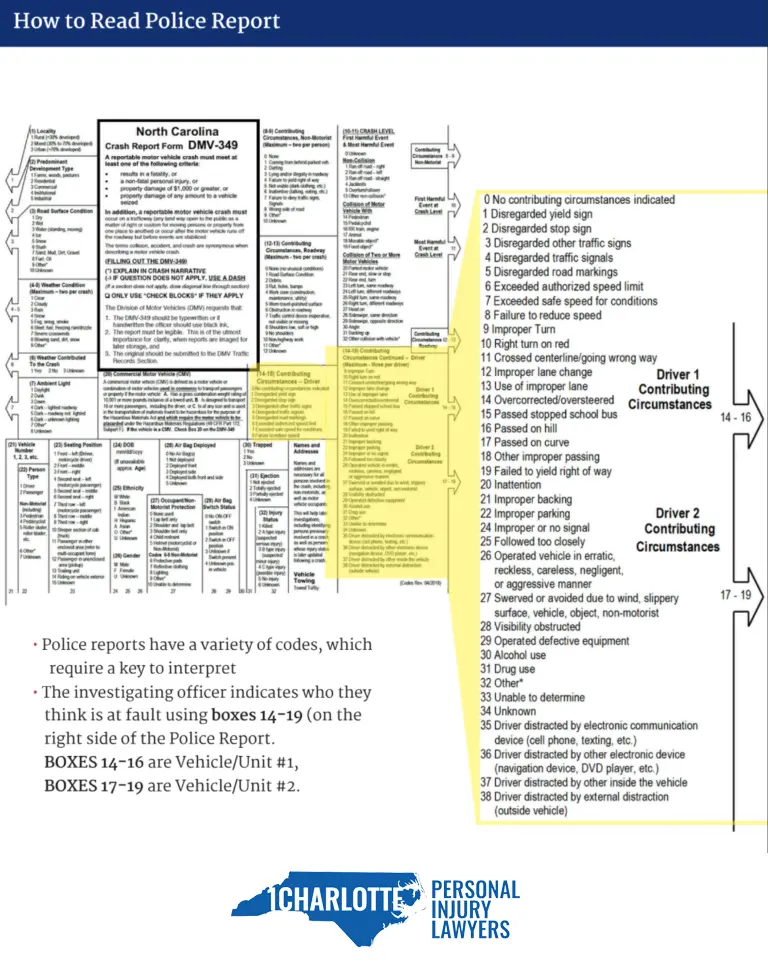
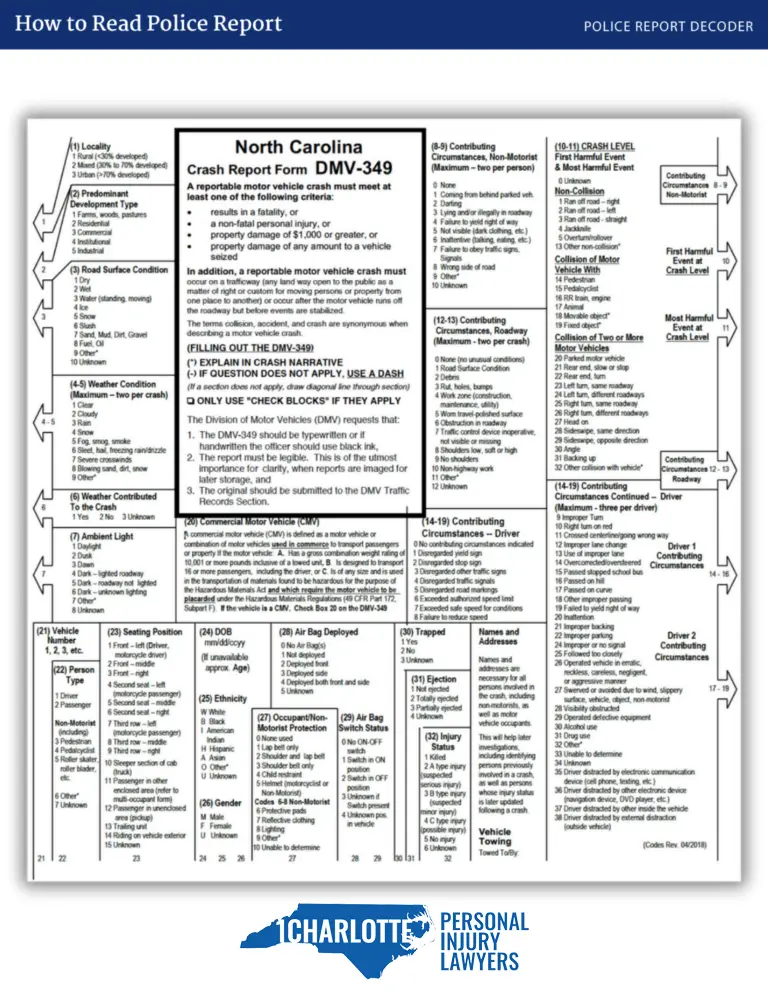
Officers across the state use the DMV-349 form to document reportable crashes. It’s a dense, multi-page form, but it breaks down into a few functional sections:
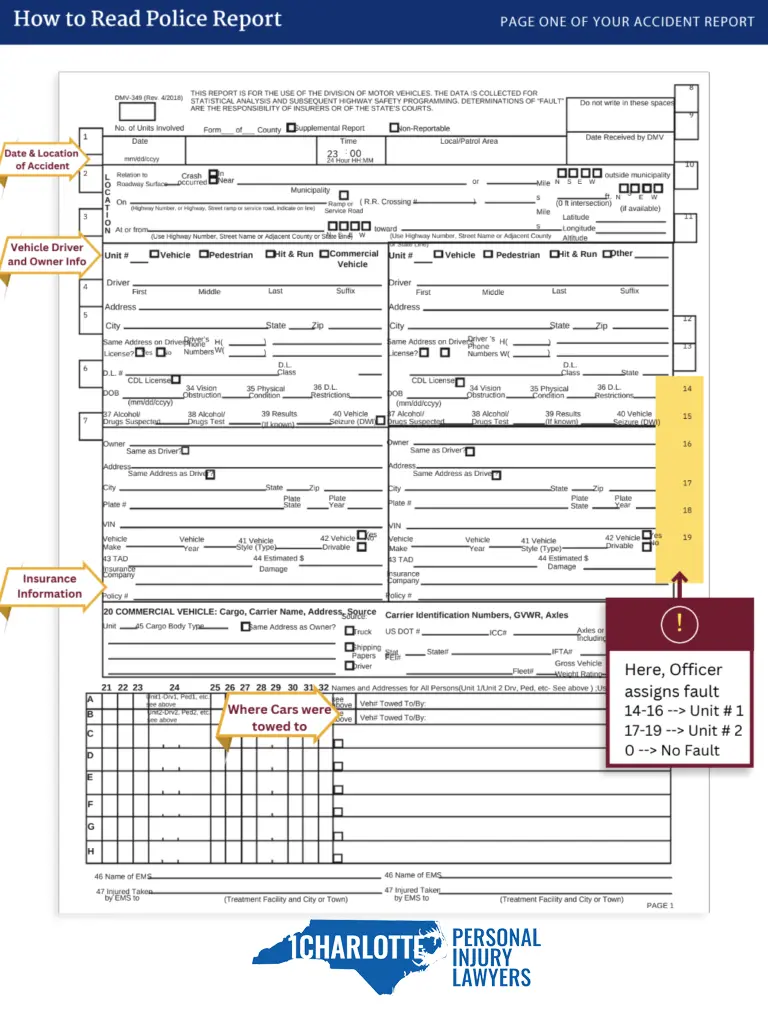
1. Identifying information. A report/incident number, the date, time, and exact location of the crash. Save this number; you’ll reference it in every conversation with your insurer or attorney.
2. Conditions at the scene. Weather, lighting, and road surface conditions at the time of the crash. These details matter more than people expect, since they factor into whether speed or following distance was reasonable.
3. Vehicle and driver details. VINs, license plates, registered owners, driver’s license numbers, and insurance information for every vehicle involved.
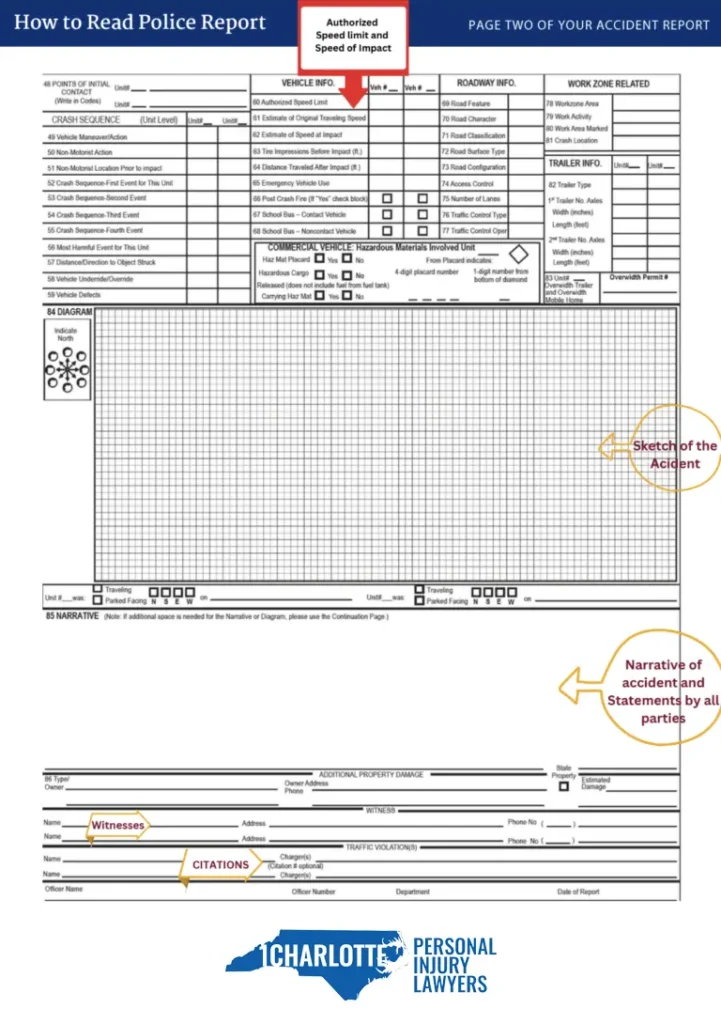
4. The diagram. A simple sketch showing where the vehicles were positioned, direction of travel, and points of impact. It’s rough, but it’s often the clearest visual record of how the crash unfolded.
5. Contributing circumstances and narrative. This is where the officer notes suspected causes, things like following too closely, failure to yield, or distracted driving, along with a short written narrative of what they observed or were told.
6. Citations issued. Any traffic tickets or charges written as a result of the crash.
Five Things Worth Double-Checking
Officers write these reports quickly, often while managing an active scene, and mistakes happen more than you’d think. Before you rely on the report, look for:
- Wrong dates, times, or locations – small errors that can still call the report’s reliability into question.
- Mismatched vehicle info – an incorrect VIN or plate number can create headaches with insurance claims.
- Misspelled names or wrong contact details – for any driver or witness involved.
- A fault narrative that doesn’t match what actually happened – this is the section with the most riding on it.
- Missing or garbled witness statements – if someone spoke to the officer but their statement isn’t reflected accurately, that’s worth flagging.
Found a Mistake? Here’s What to Do
You can request a correction directly from the police department that generated the report. Bring documentation supporting the correction (photos, your own notes, witness contact info) and be specific about what needs to change. Corrections aren’t guaranteed, but a well-documented request has a much better chance of being taken seriously.
Not Sure What You’re Looking At? We Can Help
Reading a crash report on your own, especially while you’re recovering from an injury, isn’t something you should have to figure out alone. Our attorneys at 1 Charlotte Injury Lawyers review these reports as a routine part of building a claim, and we can walk you through exactly what yours says and what it means for your case.
If you were hurt in a crash in the Charlotte area, reach out for a free, no-obligation case review with our firm (704) 706-2689.